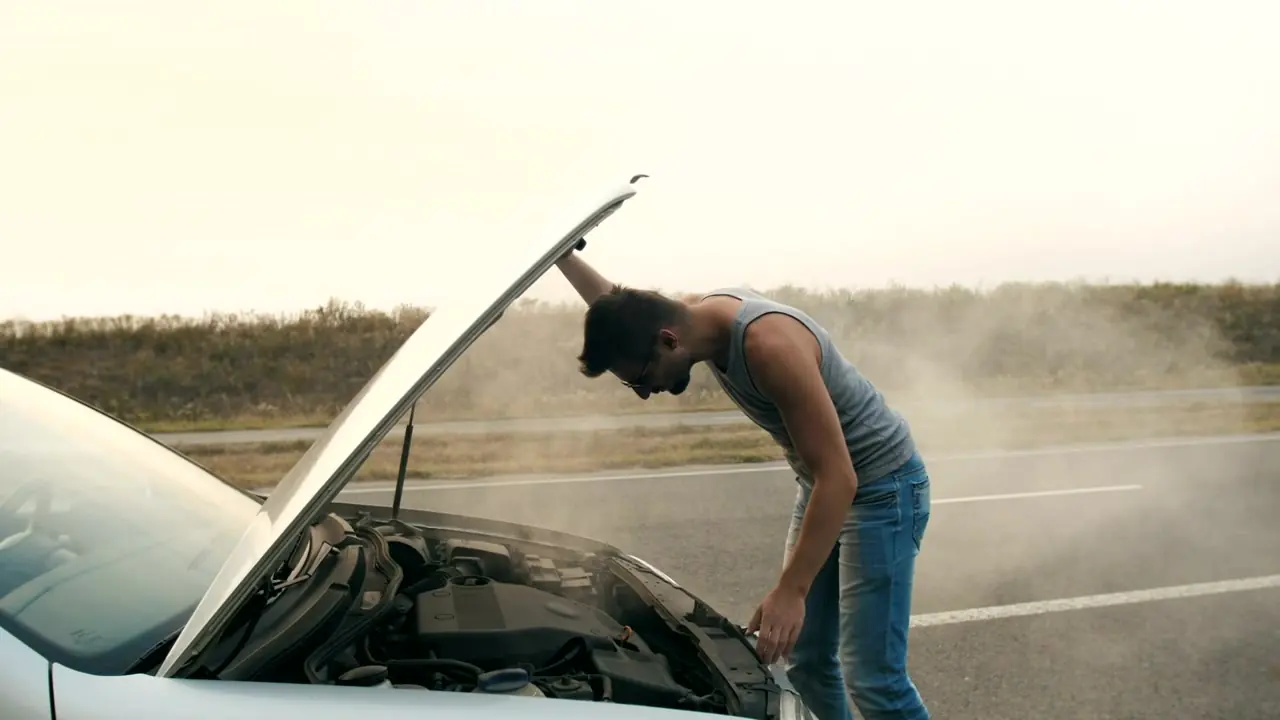
A breakdown on a fast road is dangerous because of the traffic, not the car. Everything below is ordered by what keeps people safe first.
1. Get off the running lanes
If the car is still rolling, indicate and move as far left as you can in India, or as far right as you can in North America, onto the hard shoulder or verge. Turn the wheels away from the road. If the car has stopped in a live lane and it is safe to leave, leave.
2. Hazards on, everyone out on the safe side
Switch on the hazard lights and sidelights. Get every passenger out through the doors away from traffic, and move behind the crash barrier or up the bank. Do not stand in front of or behind the car. On a road with no shoulder, such as some parkways and bridges, stay belted in the car if getting out means stepping into traffic.
3. Warning triangle, only if it is safe
A triangle about 50 metres behind the car helps on ordinary roads. On a motorway or expressway, do not walk back along the shoulder to place one.
4. Work out exactly where you are
- The kilometre or mile marker on the posts beside the road
- The last exit or junction you passed, and your direction of travel
- Or simply share your live location on WhatsApp, which is the most accurate of all
5. Call for help from behind the barrier
Call us, or your local emergency number if anyone is hurt or the car is in a live lane: 112 in India, 911 in the US and Canada. Tell the dispatcher what the car did before it stopped.
What not to do
- Do not try to change a wheel on the traffic side
- Do not accept a push from other drivers on a fast road
- Do not keep cranking a car that stopped after driving through deep water